Cremation and Aquamation: Comparing Water vs Flame Cremation, and Greener Alternatives


End Of Life Logistics
|
August 10, 2026
End-of-life planning looks different than it did a generation ago. The options have expanded, the conversations have deepened, and more Americans are approaching these decisions with the same intention they bring to the rest of their lives. Cremation is now the most common choice. Aquamation is legal in nearly half the country. And soil transformation, barely five years old as a legal option, is already capturing serious attention.
This guide covers all three, what they are, how they work, what to expect on cost, and what they mean for the environment, so you can make a choice that genuinely reflects your values.
Aquamation and cremation are alternatives to traditional burial that return a loved one’s remains as ashes. The similarities largely end there. The two processes differ in how they work, their environmental impact, cost, and availability.
Here’s what to know upfront:
For families exploring a more eco-friendly choice or green burial alternative, Earth Funeral offers soil transformation, also known as human composting, natural organic reduction, or terramation, as a third option.
{{CTA-webinar-1}}
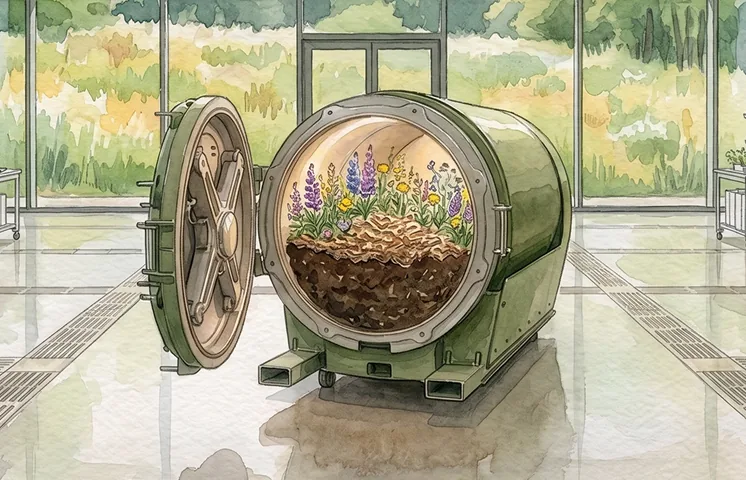
Rather than returning ashes, human composting gently converts the human body into nutrient-rich soil over 45 days, with a lower environmental footprint than both flame-based cremation or aquamation. The sections below cover each option in more detail.
Traditional flame cremation is the most common alternative to burial in the United States, and the cornerstone of the funeral industry for decades. More than half of all families currently choose cremation, and that number continues to climb. Industry data suggests cremation accounted for more than 60% of arrangements in 2024, with projections indicating flame-based cremation will continue to lead burials, exceeding 80% within the next two decades.
Here is how the process works:
Cremation services can be arranged in different ways. Direct cremation, the most streamlined choice, involves no formal service at the crematory and tends to be the most affordable. Families can still hold a memorial or celebration of life separately, giving them flexibility in timing and location.
The options for what to do with cremated remains are wide. Some families keep them at home in an urn, bury them, place them in a columbarium niche, scatter them where permitted, or incorporate them into memorial items like jewelry. That flexibility is one of the main reasons cremation has become so widely chosen.
Flame cremation has been the dominant choice in American end-of-life planning for decades, but it is not the only option worth understanding. A newer alternative takes a different approach to the same outcome.

Aquamation is also called alkaline hydrolysis, water cremation, resomation, flameless cremation, and bio cremation, but the process is the same. Sometimes referred to as chemical disposition, it uses water, lower temperatures, and an alkaline solution rather than high heat to accelerate the human body’s natural decomposition. The result for families is similar to fire cremation: ashes are returned in an urn, but the way they get there is fundamentally different.
Here is how the process works:
Aquamation produces ashes that are often lighter or white in color and finer in texture than those from flame cremation. Also, families often receive a somewhat greater volume, sometimes up to 32% more. They can be kept, scattered, or memorialized in exactly the same ways.
It also yields a liquid byproduct, called effluent or hydrolysate, which is sterile and chemically composed of salts, sugars, amino acids, and other organic compounds. It is typically discharged into municipal sewer systems or handled according to local regulations.
From an environmental standpoint, alkaline hydrolysis produces no direct combustion emissions, uses notably less energy than flame cremation approximately 90%, and allows for easier recovery and recycling of metals. These distinctions matter, particularly for anyone whose end-of-life choice is guided by environmental values.
Cost should also be top of mind. Flameless cremation typically costs more than direct cremation due to specialized equipment and limited provider availability. Further, in many states where it is legal, families may need to work with a regional facility or arrange transport to access it.
Aquamation and traditional cremation share the same outcome but take meaningfully different paths to get there. The next section breaks down exactly how they compare.

Here is what that comparison looks like up close. Both processes return ashes to families, but the similarities largely end there. Processing time, temperature, environmental impact, and what happens to implants and dental fillings all tell a different story depending on which method is used.
Breaking them down reveals just how different they are:
From a family’s perspective, the experience of arranging either process is relatively the same. You work with a licensed funeral provider, complete the necessary paperwork, and can choose whether to hold a viewing, service, or memorial before or after the process.
{{CTA-6-question}}
Timelines for receiving remains are generally comparable, often within a few days, though some aquamation facilities may require more time depending on scheduling and equipment availability.
Understanding how each process works is a starting point. For many, the more pressing question is how each one impacts our planet.
For a growing number of people, environmental impact is the deciding factor, not an afterthought, especially when looking for an eco-friendly alternative to conventional funeral methods.
The numbers tell a clear story. A single flame cremation produces an average of 535 pounds of carbon dioxide (CO₂). The U.S. alone accounts for an estimated 360,000 metric tons of emissions annually.
Beyond carbon dioxide, burning fossil fuels during the cremation process also releases harmful pollutants such as mercury from dental fillings, along with nitrogen oxides (NOX), sulfur dioxide (SO2), and particulate matter. Multiplied across millions of cremations annually, the cumulative impact on air quality and public health is significant.
Aquamation changes the equation. Although it is more energy-efficient when compared to traditional cremation, the tradeoff is water consumption. Flameless cremation requires roughly 400 gallons per body, which should be factored in depending on where you live and how you weigh water use against carbon emissions.
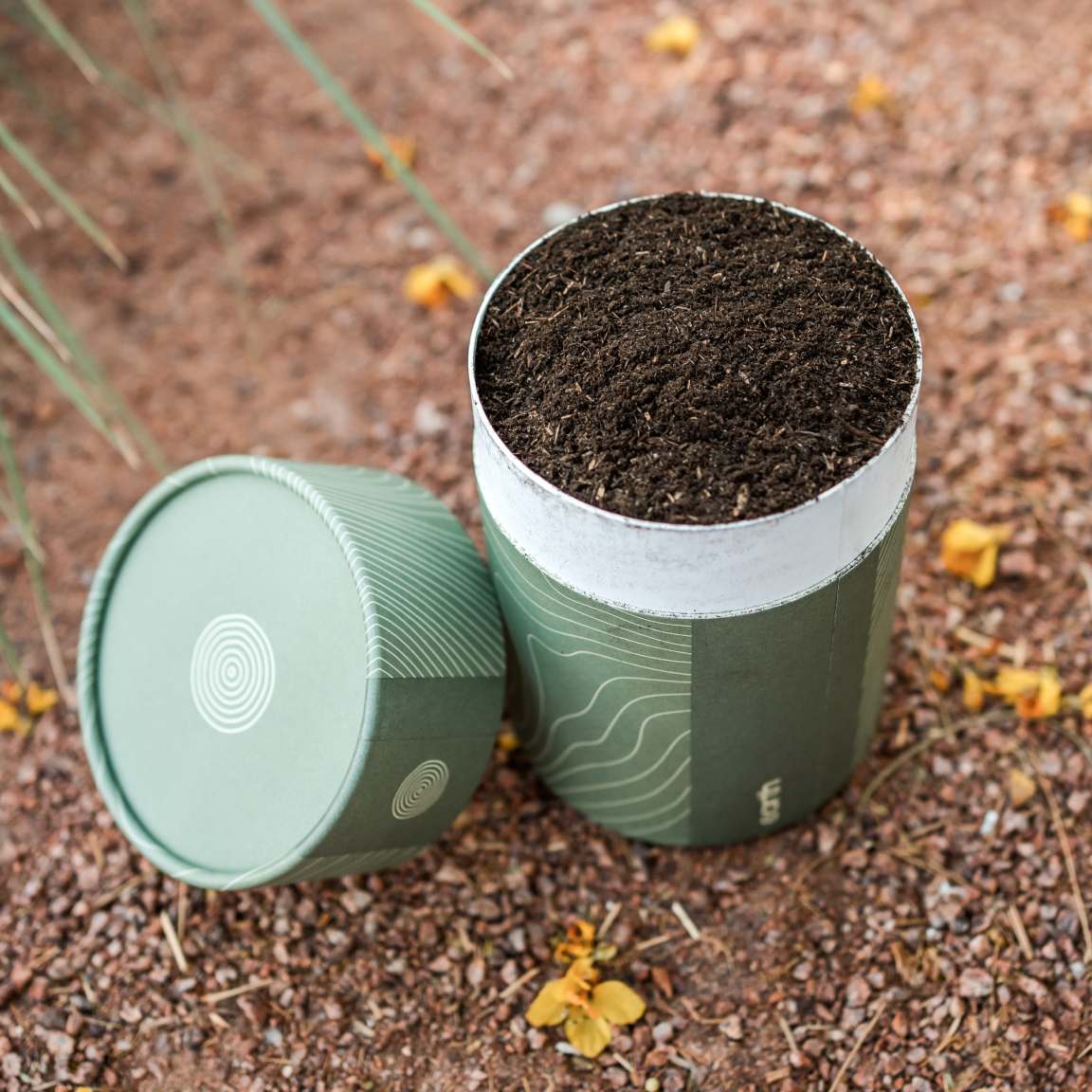
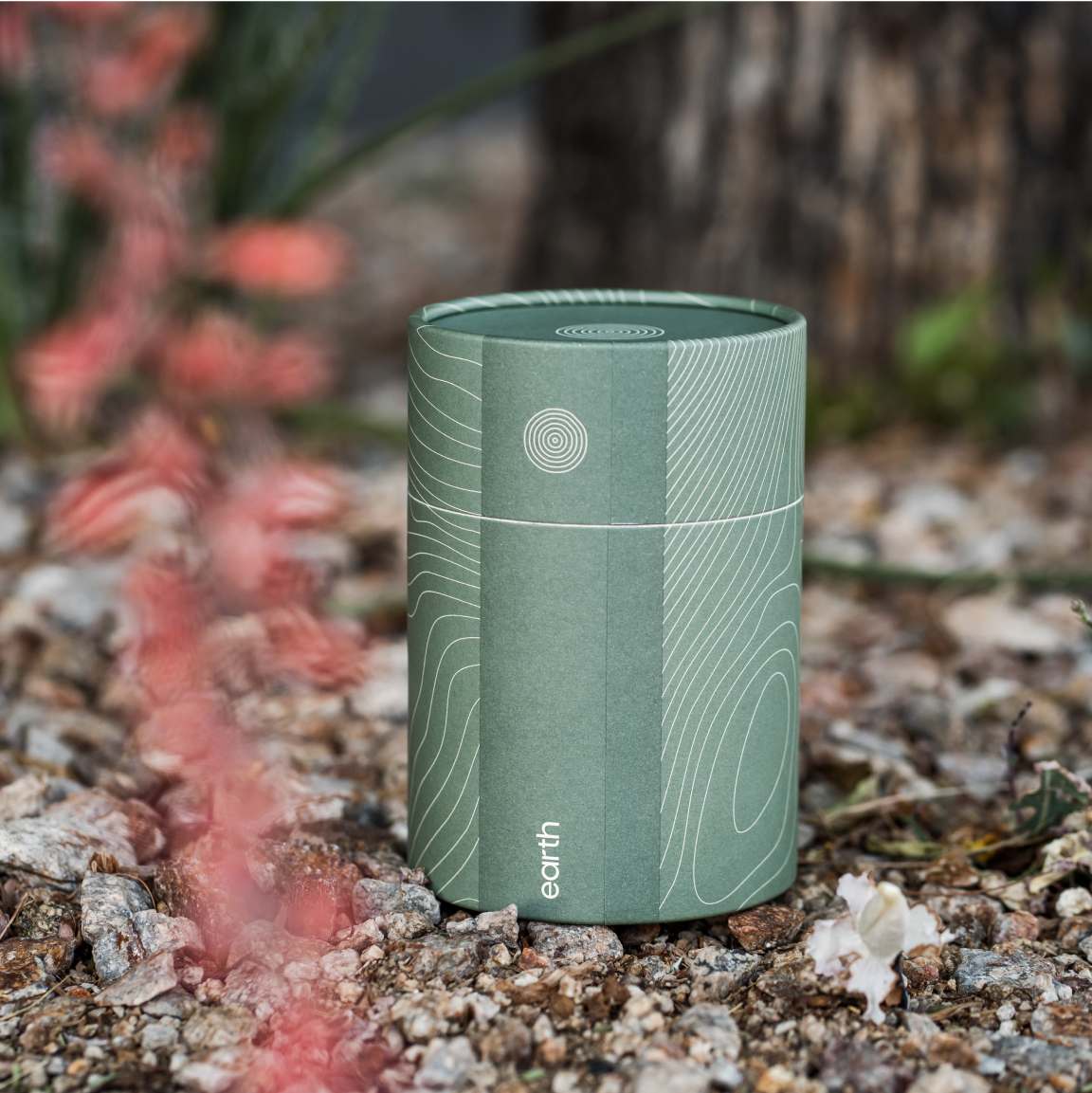
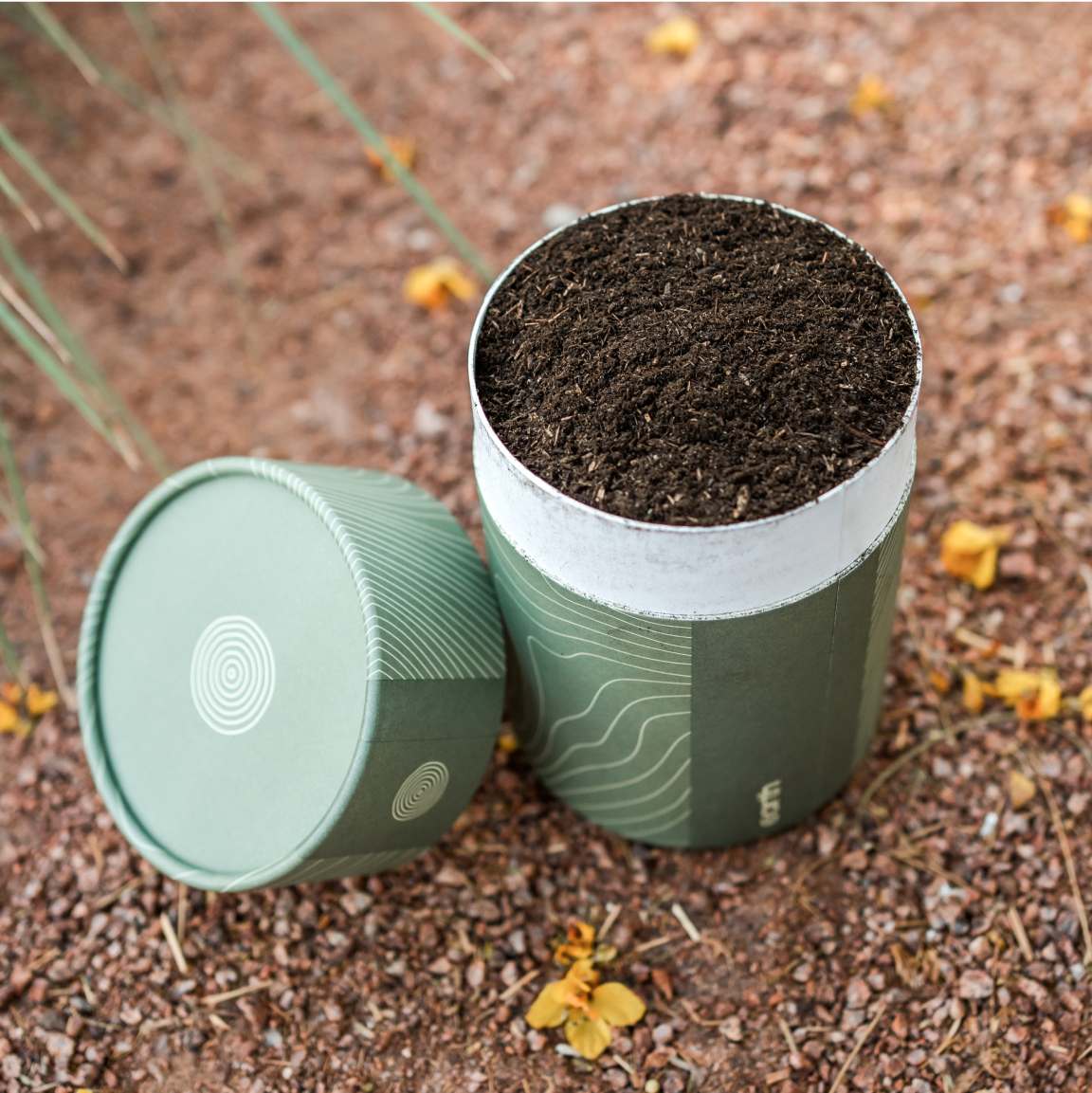
Soil transformation, a gentler process, takes a different approach entirely. The process uses about one-eighth the energy of flame cremation, requires no artificial heat, and produces no net CO₂. What it creates instead is close to one cubic yard of nutrient-rich, living soil that can be used in memorial gardens, returned to families, or donated to conservation initiatives. Rather than leaving an environmental footprint, it leaves something the earth can actually use.
Anyone weighing these options through an environmental lens will find the direction is clear. Cost is equally important and deserves the same careful thought.

Cost is often one of the first things families want to understand, and it is also one of the hardest to pin down. Prices can vary a great deal depending on location, provider, and what is actually included in a package. Transport fees, permits, urns, and ceremony costs can all affect the final cost, so any figure you see should be treated as a general range rather than an exact quote.
With that context in mind, here is how the three options generally compare.
Direct cremation, which involves no formal service at the crematory, is one of the most affordable options available. With a median cost of around $2,300, it sits considerably below full service cremation, which typically runs around $6,300, and traditional burial, which averages around $8,600. When services like a viewing, embalming, or a formal funeral are added, costs rise accordingly.
Aquamation services generally cost more than direct cremation in the same region, largely due to specialized equipment requirements, limited provider competition, and regulatory compliance costs. Direct alkaline hydrolysis with no ceremony can range from $1,300 to $3,500. The same process with a memorial service generally falls between $3,000 and $5,000, and a full service aquamation with viewing runs $5,000 or more. As with all options, exact figures depend heavily on location and which providers are available.
Soil transformation through Earth Funeral is priced as a transparent, all-inclusive package, meaning everything your family needs is covered from start to finish. That includes access to a dedicated Care Team, collection and transport of your loved one to the nearest licensed facility, licensed funeral director support, paperwork and permits, the soil transformation process itself, and the return or donation of soil. Pricing ranges between $5,000 and $7,000 depending on location and specific arrangements.
Families on a strict budget often find direct cremation the most practical and familiar choice. Those prioritizing the environment may find that flameless cremation or human composting better reflects their values, even at a somewhat higher cost. Whatever you decide, asking any provider for an itemized price list is the best way to make a fair comparison.
Price is only part of the picture. Availability and legal status vary a great deal, depending on where you live, and that can make all the difference in what is actually within reach.
Funeral practices and laws governing final disposition after death are regulated at the state level in the U.S., which means that what is available to you depends on where you live. Legal status and actual provider availability are also two different things. A state can legalize a process without having a single facility that offers it.
The alkaline hydrolysis process is expanding but access remains uneven compared to cremation. Currently, aquamation is legal in 28 states as of 2026, including Minnesota, the first state to legalize it, California, Oregon, Washington, Florida, Illinois, and Colorado, among others. However, legal does not always mean locally available. In many states where aquamation is permitted, there are few or no providers offering it, which can mean working with a regional facility or arranging transport across county or state lines.
Permits, handling of the effluent, and how each process is classified, whether as burial, cremation, or other, can also vary by jurisdiction. When in doubt, asking a licensed, local funeral director can give you the most accurate answer about availability in your area.
Flame-based cremation is the most straightforward option on this front. It is legal in all 50 states and available at or through nearly every funeral home in the country. Families rarely have to think about access.
As for soil transformation, it is currently legal in fourteen states; Washington was the first. Others include Oregon, California, Colorado, Maryland, Arizona, and Nevada, among others. Earth Funeral serves families across the U.S. and continues to expand as legislation evolves. Location is not always a barrier. Families outside of these states may still be able to access soil transformation through transport to a licensed facility, something Earth Funeral handles directly.
Laws in this space continue to unfold. Several additional states have introduced or are actively working toward legislation for both aquamation and soil transformation. Checking current legal trackers is the most reliable way to confirm what is available where you live.
Geography and legislation shape what is within reach. Personal values, faith, and emotional comfort shape what feels like the right choice for you and your family.

While cost, process, and availability are guiding factors, what a choice means on a personal, spiritual, or cultural level matters just as much.
Attitudes toward cremation vary widely across religious traditions. Many Protestant denominations, Buddhism, Hinduism, and several other faiths accept or even encourage cremation. The Catholic Church lifted its formal prohibition on cremation in 1963, though it still prefers that ashes be kept together and buried rather than scattered.
Orthodox Judaism and Islam generally maintain a preference for traditional burial. Official positions can differ even within the same broader tradition, and individual congregations or leaders may hold views that differ from denominational guidance.
Because water cremation and human composting are relatively new, many religious groups have not yet issued clear guidance. A number of faith leaders have expressed openness, particularly to aquamation given its similarity in outcome to cremation. The theological questions around these newer options are still being worked through in many traditions. If religious guidance matters to you, speaking directly with your own spiritual leader is your best starting point.
There is also an emotional dimension to this decision that deserves equal attention. People feel most at peace with cremation simply because it is familiar, both to them and to the people they will leave behind. Water cremation appeals to those who see the water-based process as gentler or more aligned with how they think about the body. And then there are those who find deep meaning in the idea of becoming soil, gently returning to the earth in a form that can nourish new life.
None of these perspectives is more valid than another. They reflect different relationships with the body, with nature, and with what it means to say goodbye.
Whatever you are weighing, having these conversations with the people closest to you before a loss occurs can make an enormous difference. It reduces uncertainty, prevents disagreement, and ensures that the people you love know how to honor you.
When it comes to choosing between these options, there is no right answer. The best choice is the one that honestly reflects your values, your circumstances, and what you want the people you love to experience when the time comes.
Pre-planning is one of the most practical and generous things you can do for your family. When wishes are documented clearly, the people left behind are spared from making difficult decisions under pressure, often in the middle of grief. That clarity is a real gift.
As you think this through, here are a few action steps that can help guide you:
Documenting your wishes clearly is one of the most important steps you can take. This could mean including your preferences in an advance directive, setting up a prepaid funeral plan, or simply writing them down somewhere your family knows to look. Whatever form it takes, a written record removes ambiguity and gives the people you love something concrete to follow.
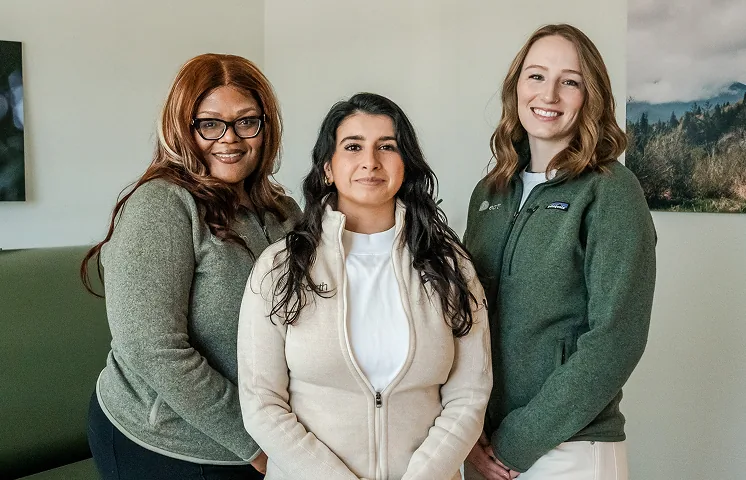
For those interested in soil transformation, Earth Funeral supports both at-need and pre-need arrangements. Arrangements can be made online, by phone, or in-person. Whichever you prefer, Earth Funeral’s dedicated Care Team is available to support your family during this difficult time, walking you through eligibility, pricing, and the process itself.
Whatever you decide, the fact that you are thinking about this says something. These are not easy conversations, but they are worth having.
Yes. Both processes reduce the human body to bone fragments that are then processed into ashes. These can be kept at home in an urn, scattered in meaningful locations where permitted, buried, or incorporated into memorial items like jewelry.
They can. Ashes from water cremation tend to be lighter in color and finer in texture, and families may receive a somewhat greater volume. Cremation ashes are typically darker and slightly coarser. The difference is purely cosmetic and does not affect how the ashes can be used or memorialized.
Generally, yes. Aquamation uses about 90% less energy than flame cremation and produces no direct combustion emissions. It does require substantially more water, roughly 400 gallons per body, which is important to note. Overall, it is widely regarded as a lower-impact alternative to flame cremation.
No. Cremation is available at or through nearly every funeral home in the U.S.. Aquamation is currently legal in 28 states, but provider availability may vary. In many states where it is legal, there are few or no local providers, which means you may have to work with a regional facility or transport remains across county or state lines. Always confirm what is actually available in your area before making a decision.
Soil transformation is a green burial alternative. Also known as human composting, natural organic reduction, or terramation, it is a gentler process that uses organic materials, controlled and monitored airflow, and natural microbial activity to convert a body to nutrient-rich soil over about 45 days.
Unlike aquamation and cremation, the result is a cubic yard of living soil that families can keep, use in a memorial garden, or donate to conservation projects.
It uses about an eighth of the energy of traditional cremation, requires no artificial heat, and produces no net CO₂. Earth Funeral offers soil transformation to families across the U.S. with seamless arrangements available online, by phone, or in person with a dedicated Earth team member, depending on proximity to a physical location.
Ready to explore soil transformation for your family?

Green Funeral Practice
The table on this page is kept up to date as a guide to where aquamation is legal in the US. Legislative changes are monitored and this page can be considered an accurate reference point.
10/30/2023
3 min read

Human Composting 101
In this guide, we look at the differences and similarities between aquamation and human composting as well as how they compare to more traditional burial methods. We explain how they work, their environmental benefits, legality by state, and cost considerations to help you decide on the best green burial option.
12/3/2023
6 min read

Green Funeral Practice
The table on this page is kept up to date to reflect the legal status of human composting in each state in the US. It can be considered an accurate snapshot of the legislative landscape at any given time.
6/17/2026
3 min read

Human Composting 101
Human composting is the gentle, natural process of turning a person into soil. This green burial option takes place in a controlled environment and allows individuals to return to nature upon death, and become part of a regenerating and natural ecosystem. It is an eco-friendly alternative to burial and cremation.
6/3/2026
9 min read