America Has Chosen: Human Composting Is Now the #1 Alternative to Burial


Company News
|
June 5, 2026
The results are in. The 2026 Choice Mutual Funeral Preferences Survey, which polled 1,516 Americans across the country, just confirmed something we've been seeing from the families we work with every day:
Natural organic reduction, also known as soil transformation, terramation, and human composting, is now the #1 alternative burial choice in America.
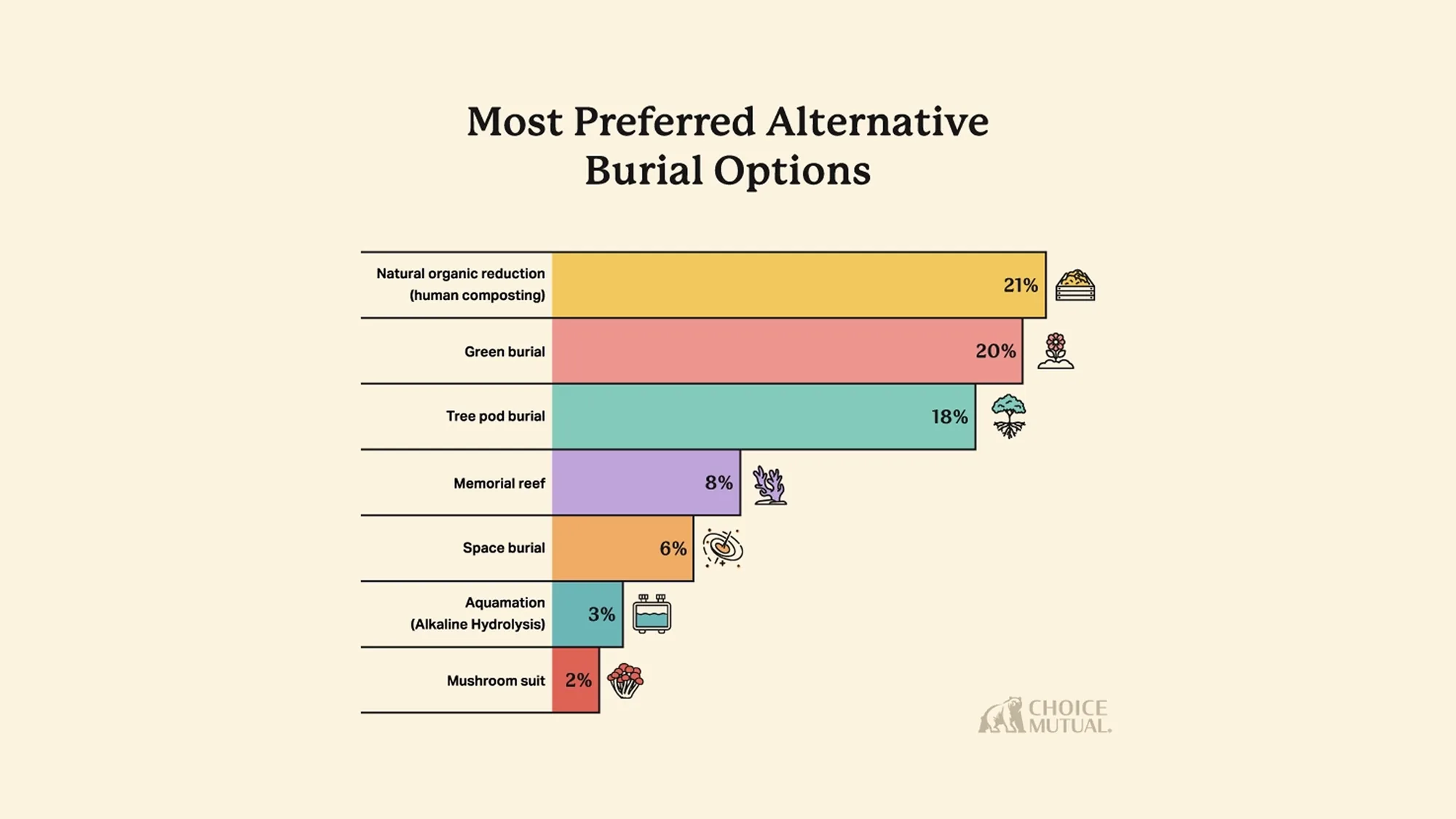
When asked which alternative burial they would choose if traditional burial weren't available, respondents answered:
One percentage point separates first from second place. But that point matters enormously. Not long ago, most Americans had never heard of soil transformation.
Today, it leads every alternative.
We find that humbling, and motivating.
The Choice Mutual report puts the average cost of a traditional funeral in 2026 at nearly $10,000, with cremation averaging nearly $7,000.
Soil transformation with Earth Funeral typically runs between $5,000 and $6,000, depending on location, timeline, and individual choices and preferences.
That means the option Americans now prefer most, the one leading on environmental values, on meaning, on the kind of legacy it creates, is also more affordable than both alternatives.
This isn't a tradeoff. You don't have to choose between what's right for your family and what's right for the planet.
We believe soil transformation delivers on every dimension: environmental impact, personal meaning, family ease, and cost.
The data is starting to reflect that.
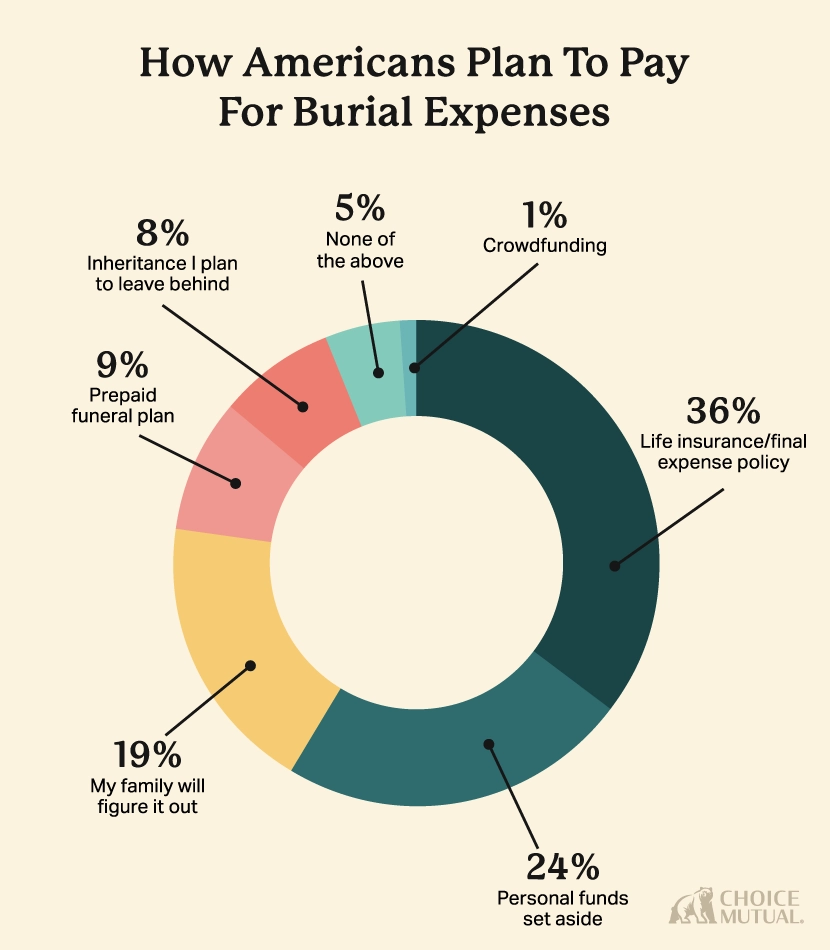
The survey found that 73% of Americans say the environmental benefits of an alternative burial would lead them to choose it over a traditional one. We're encouraged to see this number growing. And when families learn what traditional burial and cremation actually put into the earth and air, the choice tends to become visceral, not just intellectual.
Traditional burial introduces formaldehyde and other embalming chemicals into the ground. U.S. cemeteries already cover 2 million acres, more land than Los Angeles, Chicago, New York City, and Houston combined. Cremation releases approximately 360,000 tons of CO₂ annually in the U.S., the equivalent of powering 31,500 homes for an entire year.
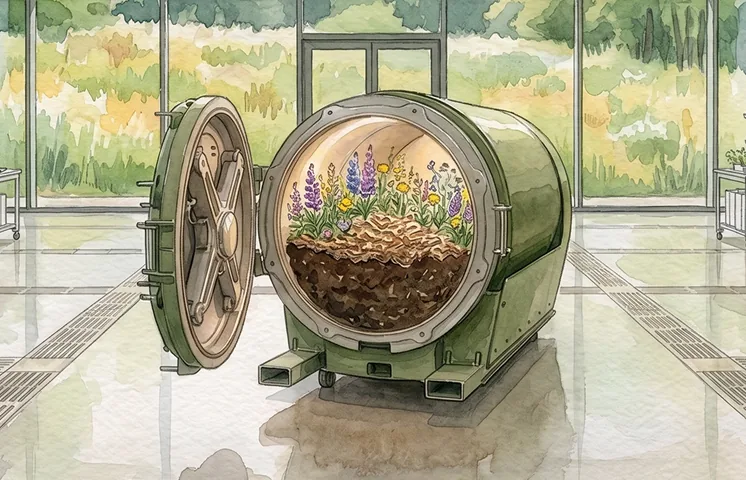
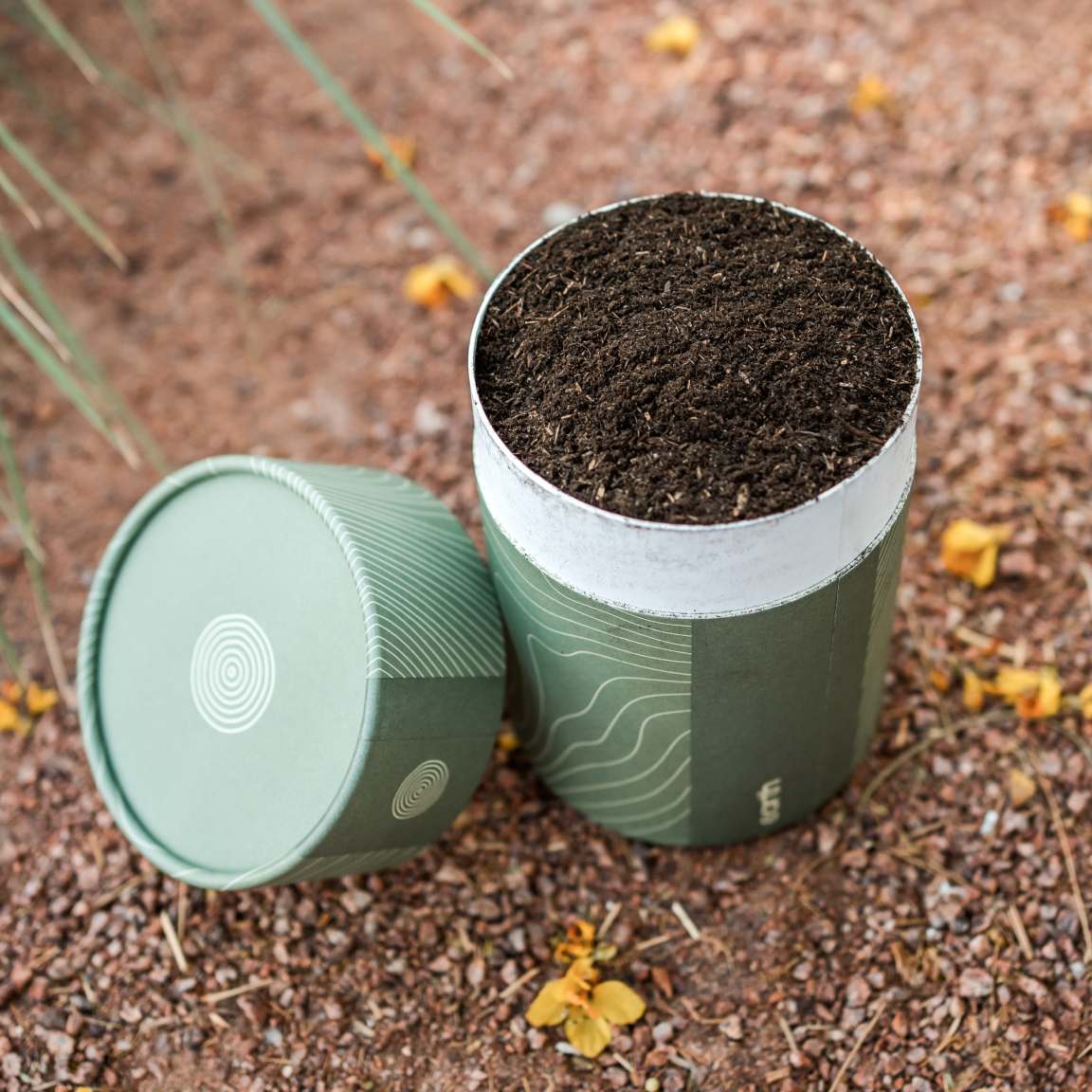
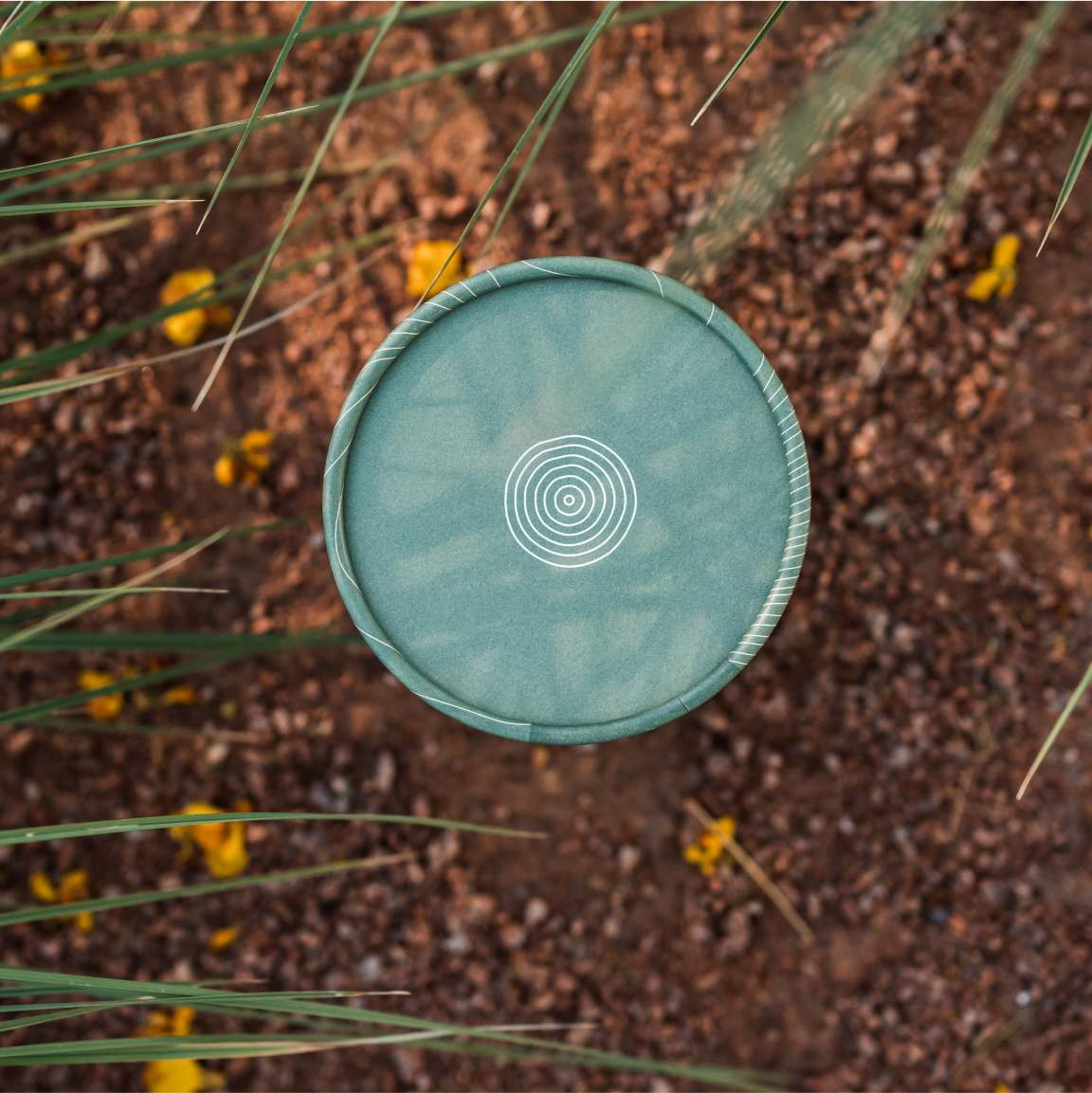
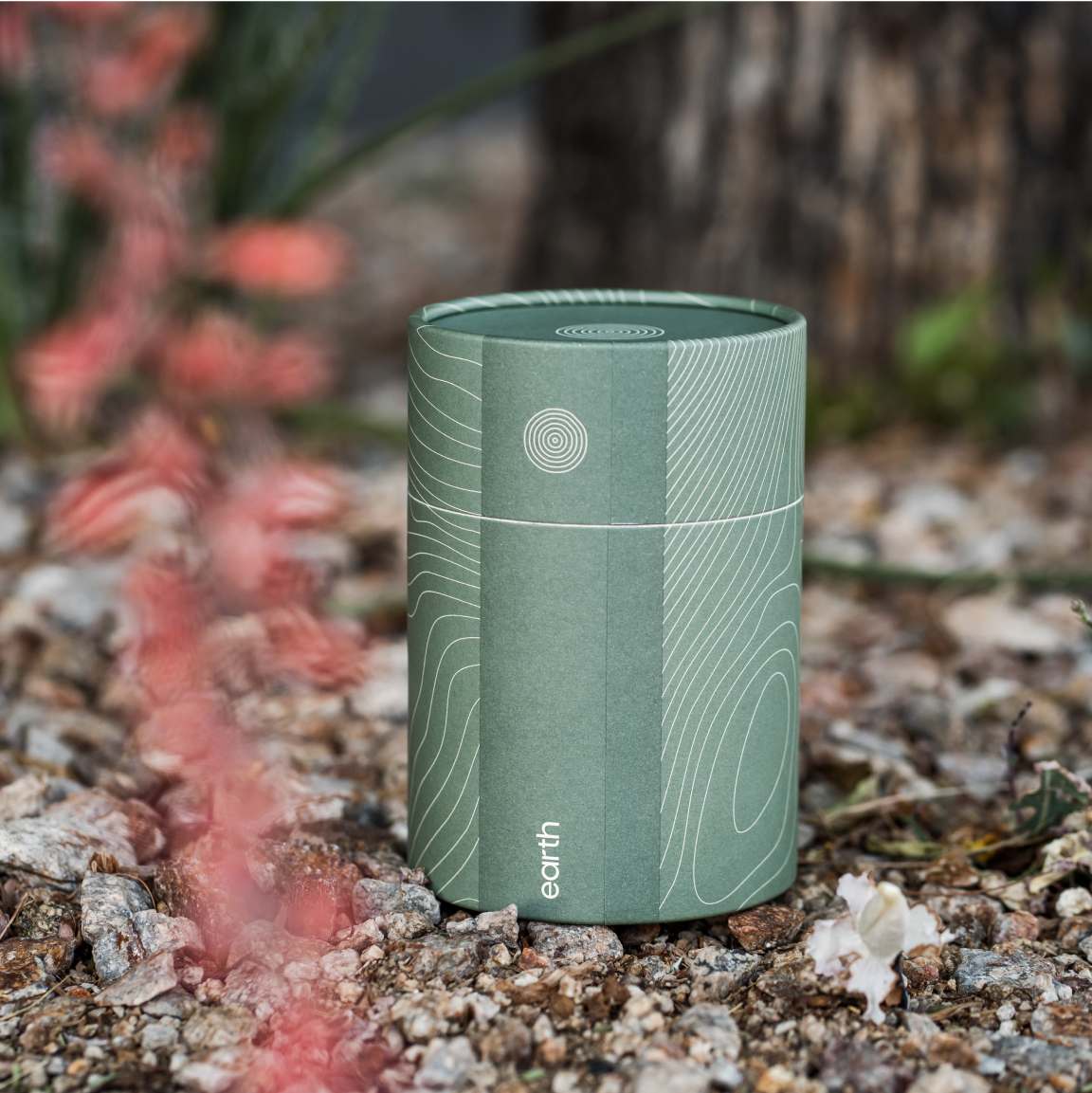
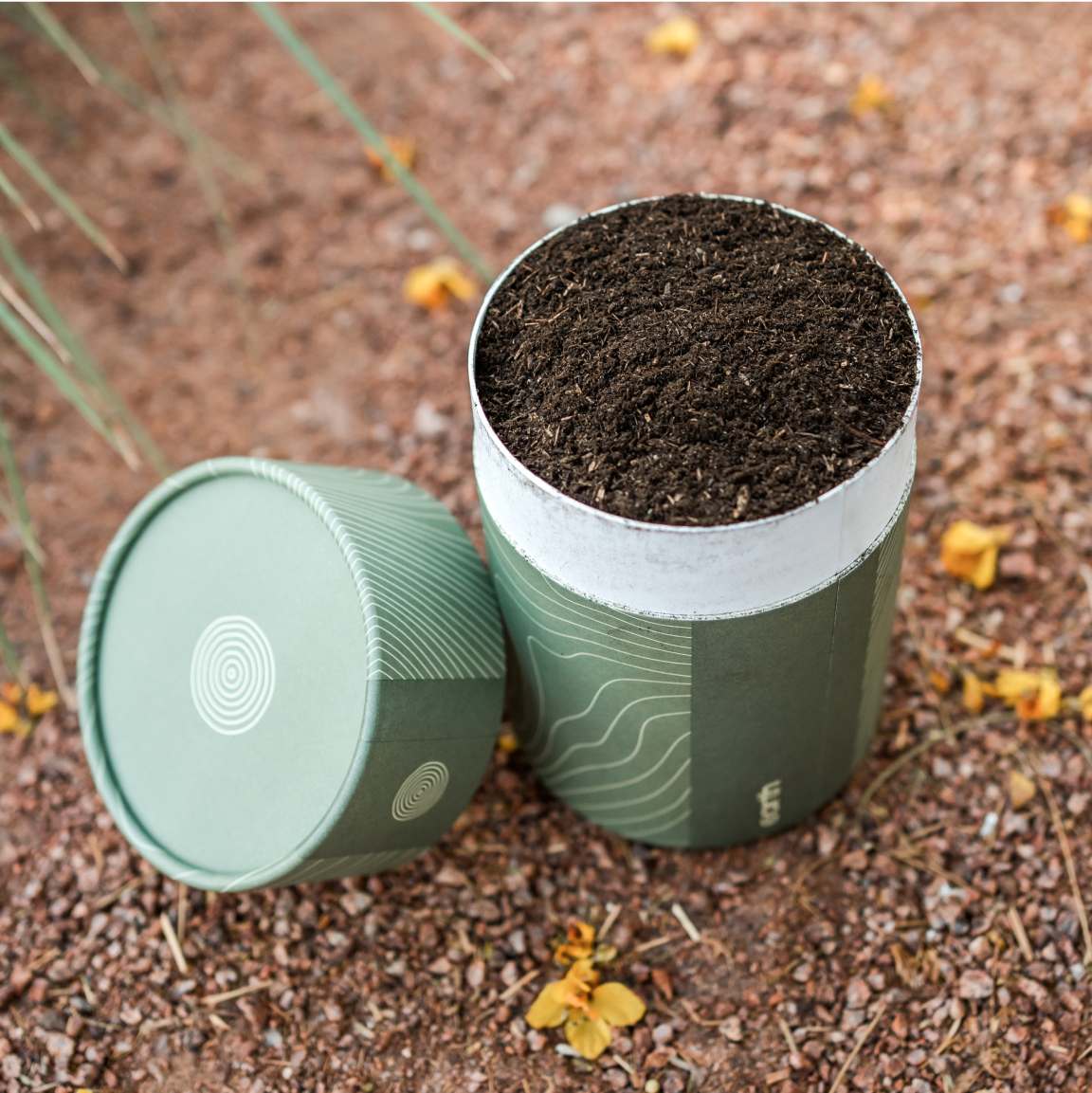
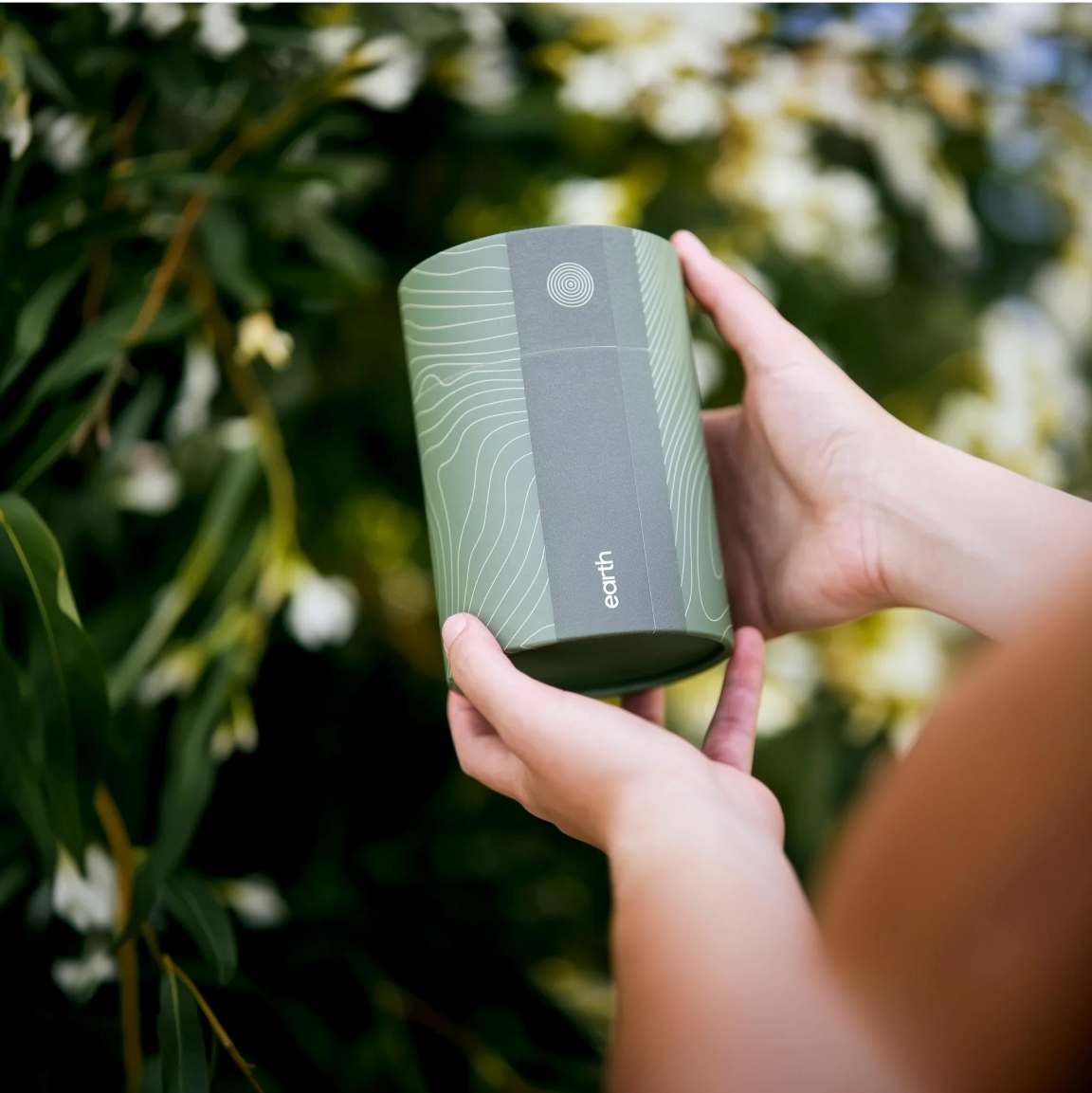
Soil transformation, by contrast, produces zero net carbon emissions, runs entirely on clean energy, uses minimal water, and creates roughly 250 lbs of living, nutrient-rich soil per person. Soil that can restore conservation land, support reforestation, or nourish a family's garden.
For 73% of Americans, that's not a nice-to-have. It's a deciding factor. We're honored to be part of that conversation.
{{CTA-webinar-2}}
The survey found that 48% of Americans would like to be cremated, the highest figure in the seven years Choice Mutual has been conducting this study. Of those, nearly 2 in 5 said they'd want their ashes scattered in a meaningful place, and nearly 1 in 5 said they'd want their ashes returned to the ground, turned into a tree or planted as a memorial.
We understand cremation's appeal. It's more affordable than traditional burial, it frees families from maintaining a grave site, and it eliminates the caskets, vaults, and embalming chemicals that spend generations underground.
But cremation ash doesn't always do what people imagine it does.
When someone says they want their ashes scattered in a meaningful place, what they're picturing is a gentle, beautiful return to nature. What actually happens is different: cremated remains are calcium phosphate fragments, not nutrient-rich material. They don't decompose. They can't be absorbed by plants. Scattered in high concentrations, they can actually alter soil chemistry and harm the very ecosystems people are trying to honor.
And for those who want to become a tree or a memorial planting? Cremation ash isn't the right material for that, either. The wish is beautiful. The execution, unfortunately, doesn't work.
Soil transformation is what those wishes are actually reaching for.
The soil created through our process can be potted into a plant, spread across a cherished landscape, incorporated into a conservation project, or used to grow something real and lasting. We always recommend verifying local rules and regulations before spreading soil on public or private land, as these vary by location.
The desire is right. The method matters.
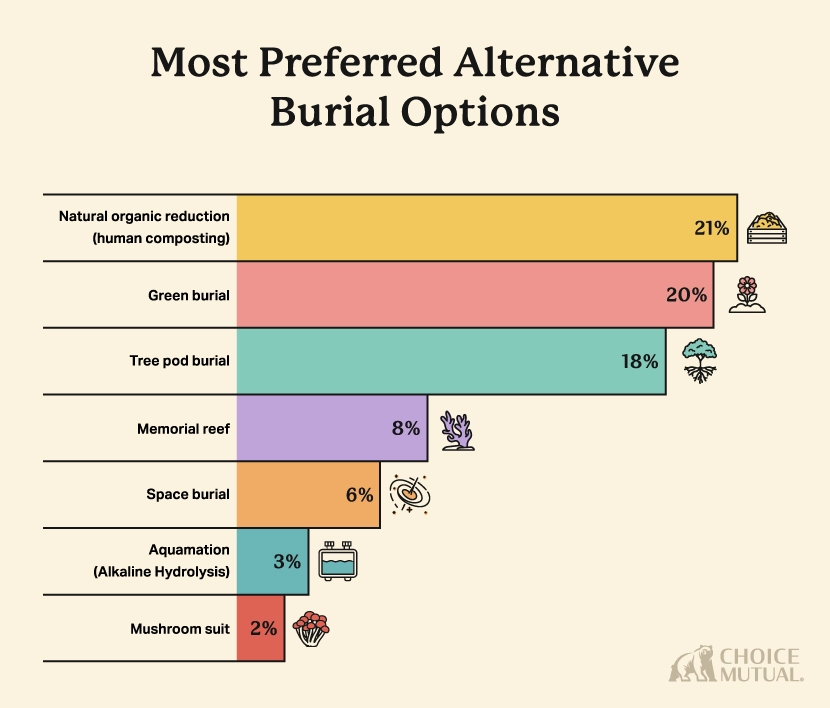
The three options that followed soil transformation in the survey are worth addressing directly, because they're not all equal, and one of them doesn't actually exist yet.
Green burial, which received 20%, is a genuinely good option. No embalming chemicals, no concrete vault, a return to the earth in its most natural form. We respect it deeply. The honest limitations: green burial still requires dedicated land, and availability is highly seasonal. Try arranging one in the middle of a New England winter and you'll run into real logistical walls. It's the right idea with real-world constraints.
Tree pod burial, which received 18%, is a beautiful concept. The product, however, doesn't currently exist as an available option anywhere in the U.S., which means a meaningful share of respondents chose something they can't actually choose today. The desire behind it, to become something living, to literally feed a tree, resonates deeply with us. It's the same impulse that draws families to soil transformation, and with Earth Funeral, that wish can genuinely be fulfilled.
Alkaline hydrolysis, also known as aquamation, rounded out the field with 3%. A water-based process that's gentler than flame cremation and carries a smaller carbon footprint, it's a meaningful step forward. At 3%, it remains limited by state availability and facility access, but we're glad it exists and glad families have options.
Other alternatives, including space burial, memorial reefs, and mushroom suits, attract a small but passionate following, and we understand the appeal.
What unites all of these: they're creative, they're conversation-starting, and they reflect the same underlying impulse that draws people toward soil transformation, the desire to give something back. We're glad the conversation has grown big enough to include all of them.
{{CTA-6-question}}
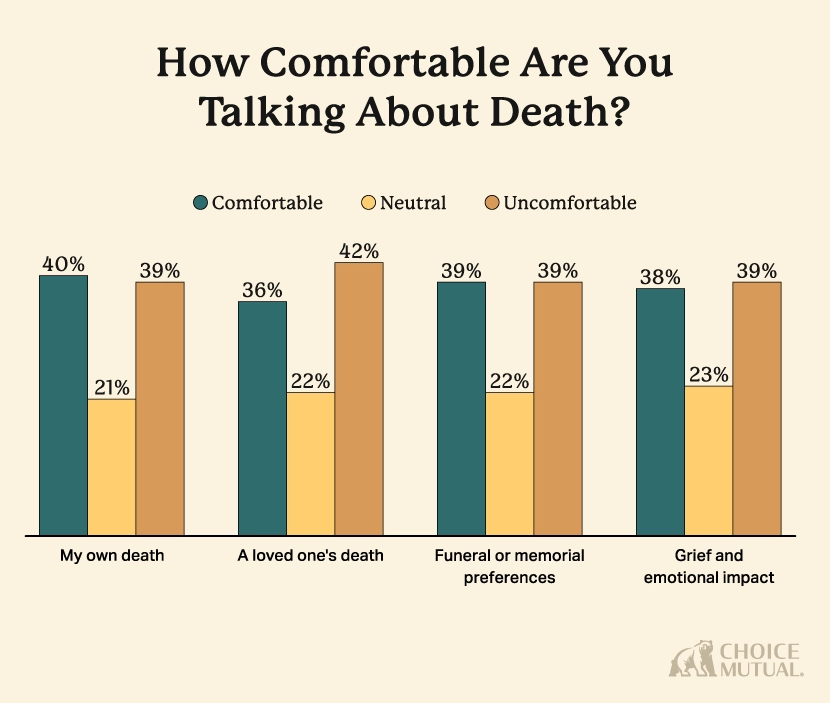
"Nearly 3 in 5 Americans (57%) think people are becoming more comfortable talking about death and end-of-life preferences."
We love seeing this. And we think soil transformation may be part of the reason.
For decades, conversations about end-of-life planning felt like conversations about loss, about endings, which made them easy to avoid and hard to start. But something different happens when families discover that their final act can literally become new life.
We regularly hear from people who describe pre-planning with Earth Funeral not just as a relief, but as something they genuinely looked forward to. There's meaning, and sometimes real excitement, in knowing your body will restore a forest, nourish a garden, or travel with your family in a way that grows.
The survey found that 1 in 2 Americans is now more comfortable talking about death than they were in recent years, and 1 in 3 has had a serious conversation with someone about their own funeral preferences. Our own 2025 data found that 86% of people making end-of-life plans are age 55 and older, choosing their arrangements while healthy, with clarity and intention. And notably, 93% of women in households with Earth Funeral arrangements were the ones who started the conversation. Women are increasingly the architects of this cultural shift.
For the 43% who still feel uncomfortable bringing this up, our Conversation Starters guide offers practical, therapist-backed ways to open the door with a spouse, your adult children, your aging parents, or close friends, without it feeling heavy or final. The anticipation of the conversation is almost always harder than the conversation itself.
The survey noted that 1 in 3 Americans has discussed their organ donation wishes with someone, with another 15% having had that conversation with a loved one specifically.
This comes up on nearly every webinar we host. It's consistently one of our top five questions: Can I still donate my organs if I choose soil transformation?
The answer is yes, absolutely. Many Earth Funeral families do. Organ donation happens before we ever receive the body, so the two are entirely compatible. We see it as a beautiful extension of the same impulse, the desire to give something back.
We call it becoming an Earth Donor: giving the gift of organs to someone who needs them, and then giving the gift of restored soil to the planet.
Two acts of generational generosity. One life.
A national survey of 1,516 Americans just confirmed what we've been hearing from the families we work with: soil transformation is the #1 alternative burial choice in America, and it's more affordable than both traditional burial and cremation.
The values driving this shift, environmental stewardship, meaningful legacy, proactive planning, aren't niche. They're mainstream. And the conversation around death is opening up in ways that make us genuinely hopeful.
We're grateful to be part of this moment, and we're committed to being worthy of it.
Ready to learn more or start your own plans? Visit EarthFuneral.com to explore pricing, get a custom quote, or speak with a member of our Care team.
Sources: 2026 Choice Mutual Funeral Preferences Survey (n=1,516); Earth Funeral 2025 Annual Report (n=2,895); Earth Funeral Environmental Impact Report.
Soil Transformation
On a recent episode of 50+ & Unfiltered, Stewart casually shared that she plans to skip burial and cremation entirely: “Oh, I’m going to be composted. These coffin things and all that stuff? No way.”
12/8/2025
3 min read
Green Funeral Practice
As families consider human composting as an alternative to cremation and burial, questions naturally arise about what happens to bones, dental work, and medical implants during the process.
6/3/2026
4 min read

Human Composting 101
Both cremation and human composting are more affordable alternatives to traditional burial and result in remains that can be scattered or kept for different types of memorialization. But these two methods differ significantly in their process and impact on the environment. Find out how they compare.
6/3/2026
4 min read