Tracker: Where Is Human Composting Legal In The US?


Green Funeral Practice
|
June 17, 2026
Updated: September 30th, 2026
Note: The table on this page is kept up to date to reflect the legal status of human composting in each state in the US. It can be considered an accurate snapshot of the legislative landscape at any given time.
Human composting is currently legal in fourteen US states: Washington, Oregon, California, Colorado, Arizona, Maryland, Nevada, New Jersey, Vermont, Maine, Delaware, New York, Georgia, and Minnesota. For individuals and families exploring eco-friendly end-of-life planning, this guide shows where state laws allow human composting, where legislation is still pending, and how transport to a licensed provider in another state can make soil transformation possible even if it is not yet legal where you live.
Human composting is a relatively new concept in funeral care. In state laws it is usually called natural organic reduction, and many providers also use the term soil transformation. As an environmentally-friendly alternative to cremation and burial, it appeals to individuals and families looking for a gentle return to nature and a funeral choice that supports land restoration.
Below, you’ll find the current legal landscape in the US, along with context on how these laws are changing, where services are available, and what to know if you are comparing human composting with burial, cremation, and other green funeral options. Bills can be proposed multiple times. If a bill does not pass in a legislative session, it can simply be reintroduced in the next session. This has been the case with human composting bills in multiple states.
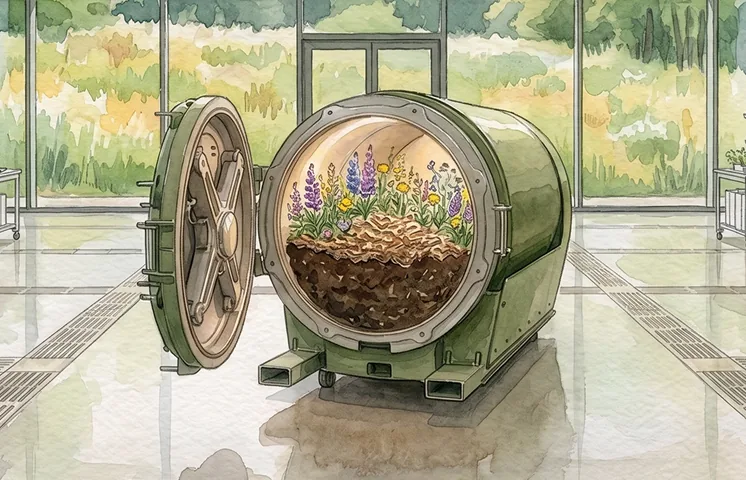
Human composting is one of several eco-friendly alternatives to traditional funeral practices. The process uses organic materials and the principles of nature. Conditions found in the natural world are recreated by balancing elements such as carbon and nitrogen, and optimizing temperature and moisture levels. The body is broken down on a molecular level and the end result is healthy soil, which is perfectly suited for conservation uses.
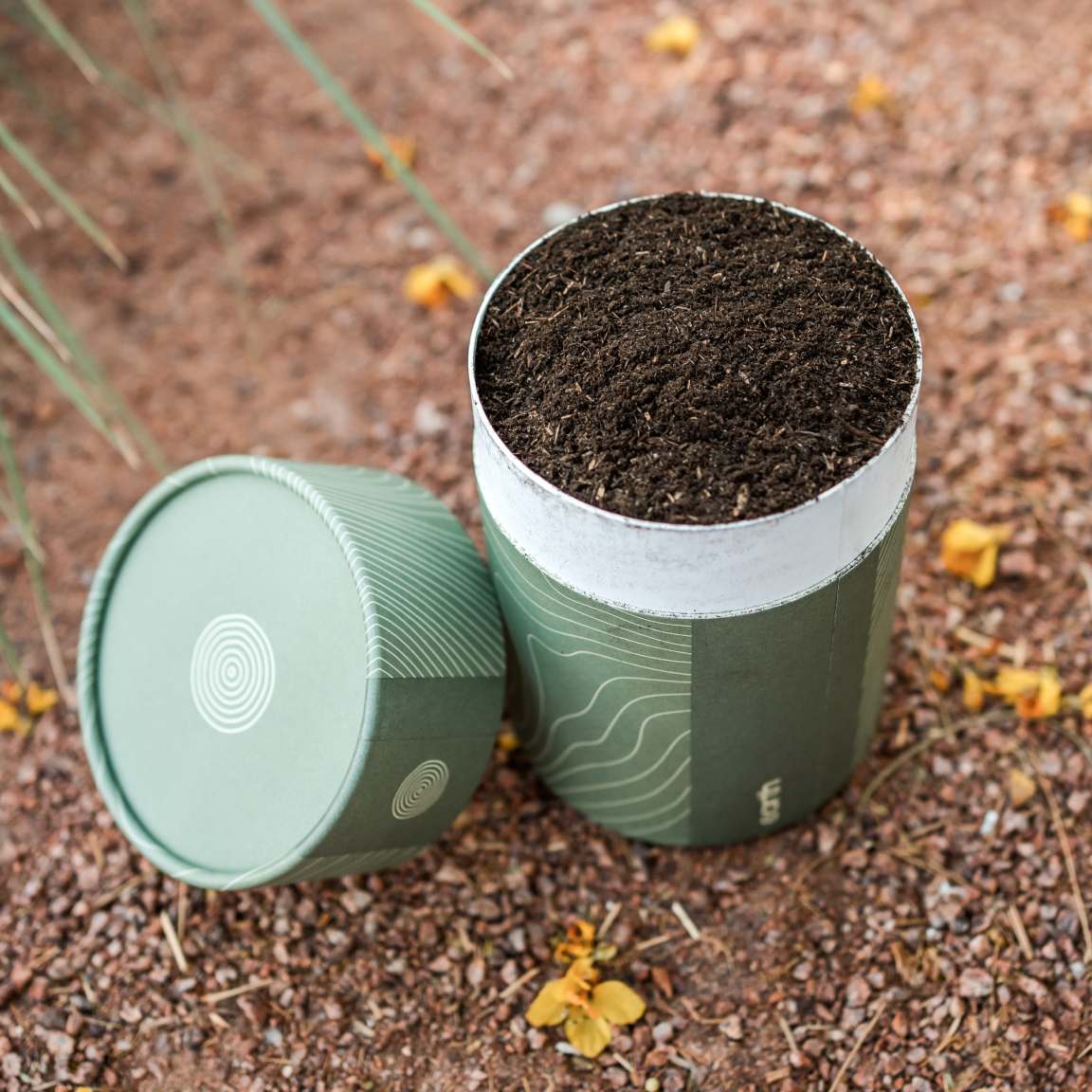
The cubic yard of healthy soil produced is perfect for conserving and restoring land. This means that families can use some of the soil for memorialization and the rest can be used for conservation projects. Soil health is fundamental for reforestation, erosion control and revitalizing challenged ecosystems.
Human composting is therefore friendly to the environment both during and after the actual process.
{{CTA-webinar-2}}
All disposition methods are strictly regulated in the US. State laws must expressly provide for Natural Organic Reduction, making human composting legal only where providers can offer it, and the process must occur in licensed, state-regulated facilities.
In states where the process is legal, operators must obtain a license from the state's funeral regulator before providing services.
In states where the process is not yet legal, human composting may still be available to residents. Families can often arrange interstate transport of remains through a funeral home or trusted partners to a licensed facility in a neighboring state where the process is permitted.
Washington State was the first state to legalize human composting in 2019, with the law taking effect in May 2020. This relatively new concept in the funeral industry continues to evolve, and states regularly introduce bills to legalize human composting and bring human composting to more residents.
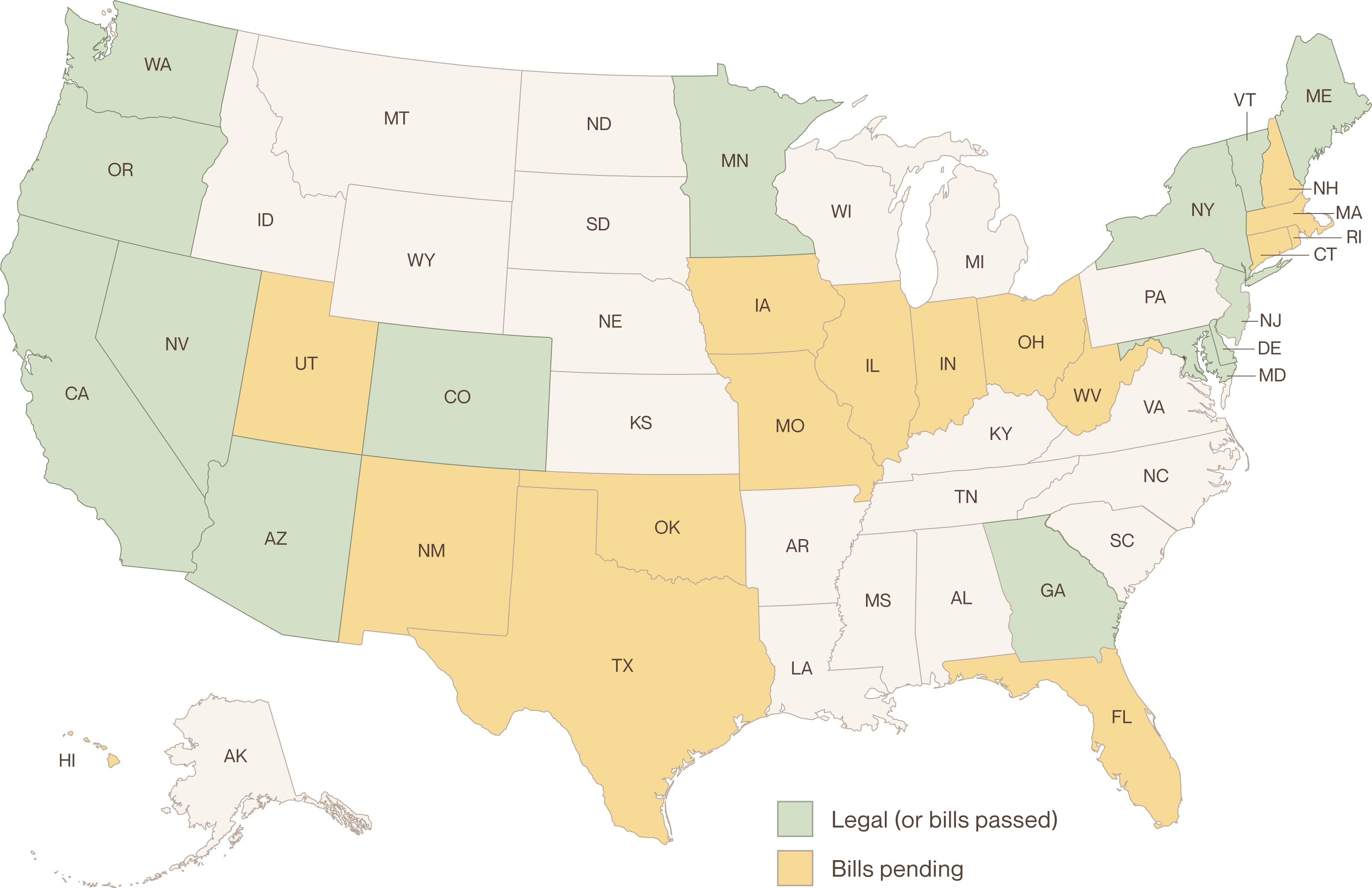
The table below outlines where human composting is legal, and separately, where Earth’s human composting services are available.
Even if your state hasn’t passed human composting laws yet, we may still be able to help. In many states, we can arrange transport to one of our licensed facilities and return the soil to your family.
Use the “Availability” column to check if services are:
Human composting is legal in many states, and more are passing laws every year. Where it's not yet available, it's simply because legislation hasn't caught up to what families want. Human remains are carefully regulated, so laws must specifically allow natural organic reduction before it can be offered as a funeral choice.
Changing laws takes time as lawmakers review the science and consider public health. Some communities prefer traditional burial, and certain religious groups have specific requirements for honoring someone who has passed. As awareness grows about the environmental benefits, more states are legalizing human composting. Families can often transport their loved ones to licensed facilities in states where it's legal, so this sustainable and meaningful alternative remains within reach.
The human composting process is far more environmentally friendly than traditional funeral practices.
Traditional burial consumes urban land at an unsustainable rate, and the materials and chemicals buried with a body can lead to soil pollution. In the US alone, 4.3m gallons of embalming fluid are buried each year, along with 64.5 thousand tons of steel, 1.6 million tons of reinforced concrete and 20 million board feet of hardwood.
Human composting on the other hand is very positive for soil health, returning the goodness of the human body to the earth.
Cremation is reliant on fossil fuels and requires temperatures between 1,200°F and 2,000°F. With the average cremation taking two hours, there is a significant energy requirement in creating and maintaining this heat. As a result, the average cremation produces a lot of CO2 - an estimated 535 lbs, which is the equivalent of a 609 mile car journey.
Earth’s soil transformation process produces no net CO2 emissions and uses renewable electric energy sources.
Beyond the obvious environmental benefits, human composting is also a conceptually appealing process for many, representing a return to nature. Appealing to conservationists and nature-lovers, the process also allows for meaningful memorialization with family and friends able to spread or plant some of the soil.
At Earth, we call our proprietary human composting process ‘soil transformation' as part of a changing funeral industry focused on greener death care options. We operate from the largest and most advanced facilities in the world, and our services are currently available in Arizona, California, Idaho, Illinois, Maryland, Nevada, New Jersey, New Mexico, Oregon, Pennsylvania, Utah, Virginia, Washington, and Washington, D.C.
We offer services for those who have an immediate need, as well as those looking to plan ahead for the future. The U.S. funeral service industry generates about $20 billion annually, which helps explain growing demand for new sustainable services.
If you are interested in our human composting services, you can get a personalized quote here. We also have a number of useful articles in our Guide, covering green funeral practices, end-of-life planning and more.
Soil Transformation
On a recent episode of 50+ & Unfiltered, Stewart casually shared that she plans to skip burial and cremation entirely: “Oh, I’m going to be composted. These coffin things and all that stuff? No way.”
12/8/2025
3 min read
Green Funeral Practice
As families consider human composting as an alternative to cremation and burial, questions naturally arise about what happens to bones, dental work, and medical implants during the process.
6/3/2026
4 min read

Human Composting 101
Learn how organ donation and human composting can work together. Explore the process, benefits, and how to ensure your end-of-life wishes include both sustainable choices.
6/3/2026
2 min read

Human Composting 101
Human composting is the gentle, natural process of turning a person into soil. This green burial option takes place in a controlled environment and allows individuals to return to nature upon death, and become part of a regenerating and natural ecosystem. It is an eco-friendly alternative to burial and cremation.
6/3/2026
9 min read