As Seen In TechCrunch: Making life (and death) better despite regulatory barriers


.avif)

TechCrunch
|
December 18, 2025
TechCrunch’s Build Mode interviews Earth Funeral co-founder & CEO Tom Harries about building a regulated “death tech” company, educating families on soil transformation, and expanding access state by state.
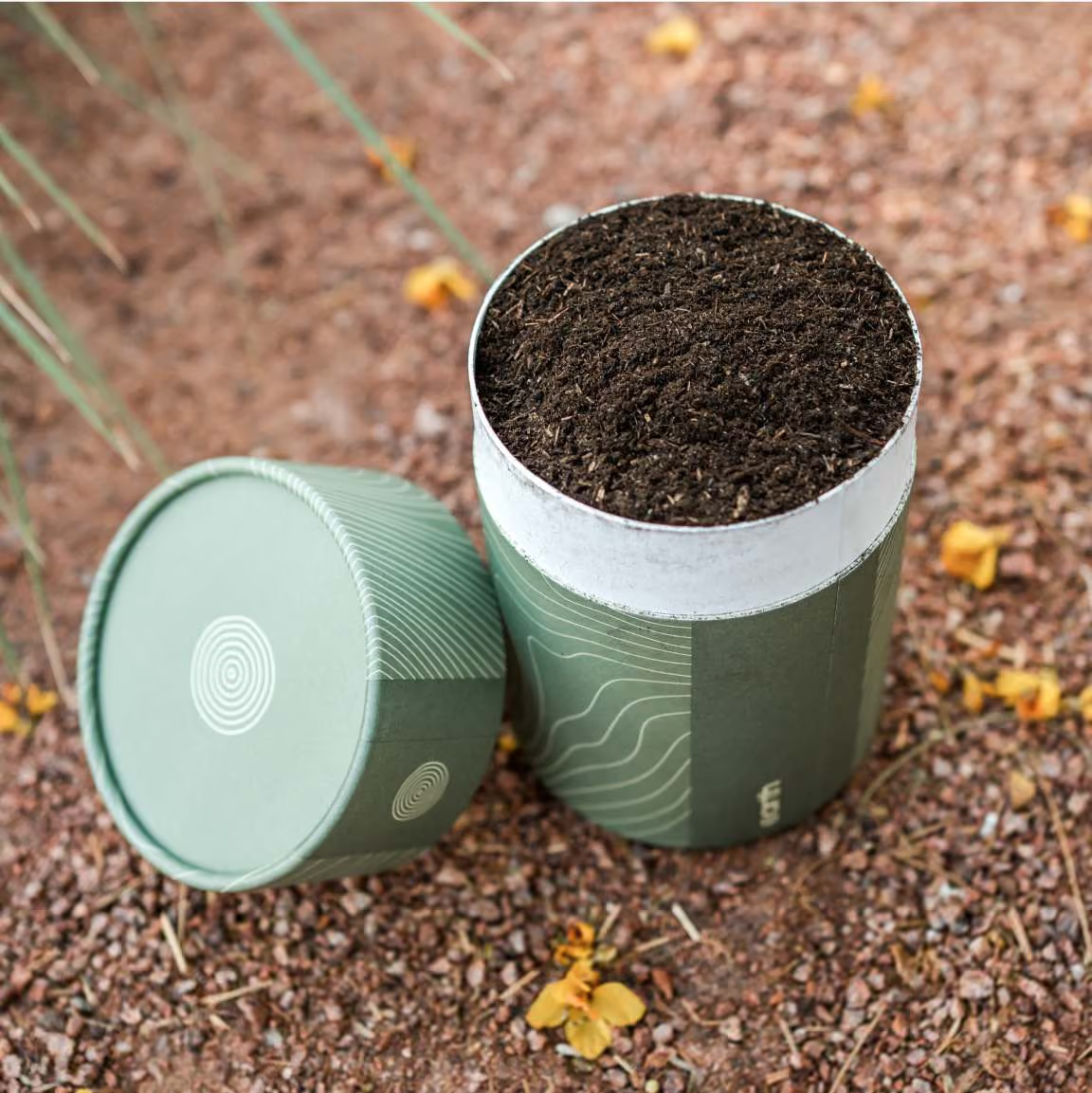
Harries explains that Earth Funeral offers an environmentally friendly alternative to burial and cremation—“soil transformation”—that turns the body into nutrient-rich soil as a gentler, more meaningful option than the status quo. He frames Earth’s work as both innovation in the process itself and innovation in how the service is accessed, aiming to modernize a historically antiquated industry.
A central theme of the conversation is why end-of-life planning is so taboo in Western culture. Harries notes the funeral industry often carries negative associations, compounded by grief and the complexity of making arrangements during a hard moment. Earth cannot change the sadness families feel, he says, but it can provide options that better align with people’s beliefs and preferences while making arrangements easier to manage.
On education, Harries emphasizes that “traditional media still remains really effective,” especially for Earth’s audience. Because soil transformation is a new concept for most people, it tends to be inherently “press worthy,” which helps it earn coverage that introduces the idea and builds trust. From there, the focus becomes making it easy for families to understand the process and take next steps.
The discussion then turns to regulation and expansion. Harries describes state-by-state legalization as the single biggest obstacle the company has faced. Earth launched when the process was legal in only one state, Washington, which he credits with creating thoughtful early regulations that set quality guardrails without stifling innovation. He notes that legalization has since expanded to 14 states and is often driven by consumer demand rather than industry lobbying.
Harries also clarifies the practical impact of legality: legalization determines where facilities can operate and where the process can be performed. Families can still access the service across state lines by transporting remains to a state where the process is legal, which is common today as Earth serves families in nearby states from its facilities.
Finally, Harries shares how Earth thinks about scaling in a regulated space. He points to major investment in research and development—building industry-leading technology and a multidisciplinary team of scientists and engineers—as a foundation for safe, robust operations, emphasizing that Earth’s goal is to help as many families as possible while doing good for people and the planet.

Return to nature through soil transformation
A natural alternative to burial or cremation that creates new life. Get an instant quote by answering just a few questions.
{{CTA-webinar-2}}
"You need a certain mentality. You need to be really motivated by really the end goal which in our case is having impact and trying."