
The environmental impact nobody talks about...
Watch and learn





As featured in:


Return to nature
Soil transformation is a natural, eco-friendly alternative to burial and cremation. Over six weeks, the body is gently transformed into nutrient-rich soil that can be used to create memorial gardens, restore ecosystems, or spread in your favorite places.






The Environmental Impact Of Funeral Choices
Compare the ecological footprints of burial, cremation, aquamation, green burial, and soil transformation.
Read report
The Science Behind The Soil
Explore the biology of soil transformation, the ecological value of the resulting soil, and why it matters for the planet.
Read report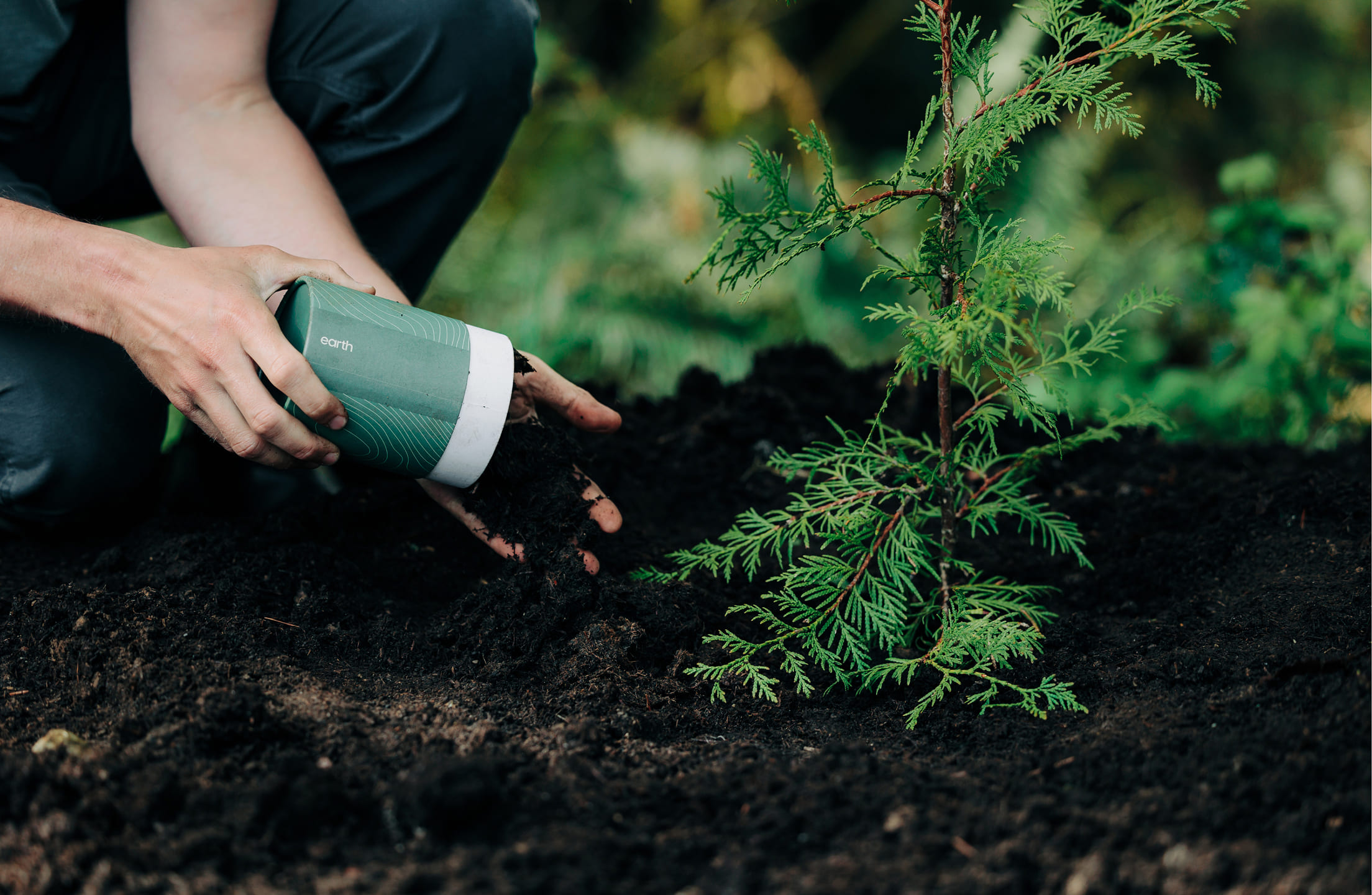
How To Use Your Soil
Discover eight meaningful ways families memorialize their loved ones with nutrient-rich soil, from potting plants to conservation donations.
Read report
Your questions, answered

How much does it cost?

Soil transformation typically costs less than full-service cremation and burial nationally, according to recent NFDA data. Every arrangement is custom because of location, transportation, soil return, and a few personal choices. By answering a few quick questions, we provide you with an instant price based on your exact requirements. No hidden fees, and no surprise add-ons, ever.
Where is human composting legal?
Natural Organic Reduction, also known as Soil transformation or human composting, is currently legal in: Arizona, California, Colorado, Delaware, Georgia, Maine, Maryland, Minnesota, Nevada, New Jersey, New York, Oregon, Vermont, and Washington.
Legislation has been introduced in: Connecticut, Florida, Hawaii, Illinois, Indiana, Iowa, Kansas, Massachusetts, Missouri, New Hampshire, New Mexico, Ohio, Oklahoma, Pennsylvania, Rhode Island, Tennessee, Texas, Utah, Virginia, and West Virginia.
Legality determines where facilities can operate, not where families can be served. Earth Funeral currently provides service to families in Washington, Oregon, California, Idaho, Utah, Nevada, Arizona, New Mexico, Illinois, New Jersey, Pennsylvania, Virginia, and Maryland.
What happens to the bones, teeth, and implants?
Over 30 to 45 days, microorganisms gently break down all organic matter, including soft tissue, bones, and teeth. Bones soften naturally during the process and are incorporated into the soil alongside the transformed material, creating approximately one cubic yard of nutrient-rich soil.
Any inorganic materials, including dental fillings, joint implants, prosthetics, and medical devices, are respectfully separated at the end of the process and recycled. Nothing is discarded.
How does soil transformation support surviving loved ones?
Families choose Earth not just for what we do, but for the emotional relief and care we provide during life's hardest moments.
Because everything is decided in advance, families are spared more than 125 difficult decisions they would otherwise face in the midst of grief. No caskets, no flowers, no last-minute logistics. Just the freedom to focus on remembering, healing, and being together.
The soil itself becomes a living memorial. Families pot plants, spread soil at meaningful places, share portions with loved ones, or donate to conservation projects. There is no fixed timeline. You grieve at your own pace, and the connection continues to grow.
Pre-planning deepens these benefits further. It locks in today's prices against future inflation, removes paperwork and administrative burden from your family, and includes travel protection so you are covered no matter where you are in the world. Our team handles everything, at no additional cost, so your family never has to.
For many families, the most meaningful reason is simpler than all of this: your final act reflects who you are. If you have spent your life caring about the environment, soil transformation ensures you are not compromising your values when it matters most. Your legacy becomes literally alive, in every garden planted, every tree nurtured, every landscape your soil helps heal.
How do families use the soil?
Each transformation produces approximately one cubic yard of nutrient-rich soil. Your arrangement includes five biodegradable containers returned to you anywhere in the United States. The remaining soil is donated to conservation projects.
Families use their soil in deeply personal ways. Some pot plants or seedlings and give them away at celebrations of life. Others plant rose bushes, trees, or gardens that bloom every season. Some carry soil to meaningful places, spreading it at mountain summits, favorite parks, or across multiple countries. Others wear it close in memorial jewelry, keep it on a bedside table, mix it with the remains of a beloved pet or spouse, or donate it entirely to forest restoration.
There is no right way. Whatever feels meaningful to you is the right choice.

